Why balance matters as we get older
Written by:
-1.png&w=3840&q=75)
30 Sep 2026 • 4 min read
Reviewed and fact-checked:
.png&w=3840&q=75)
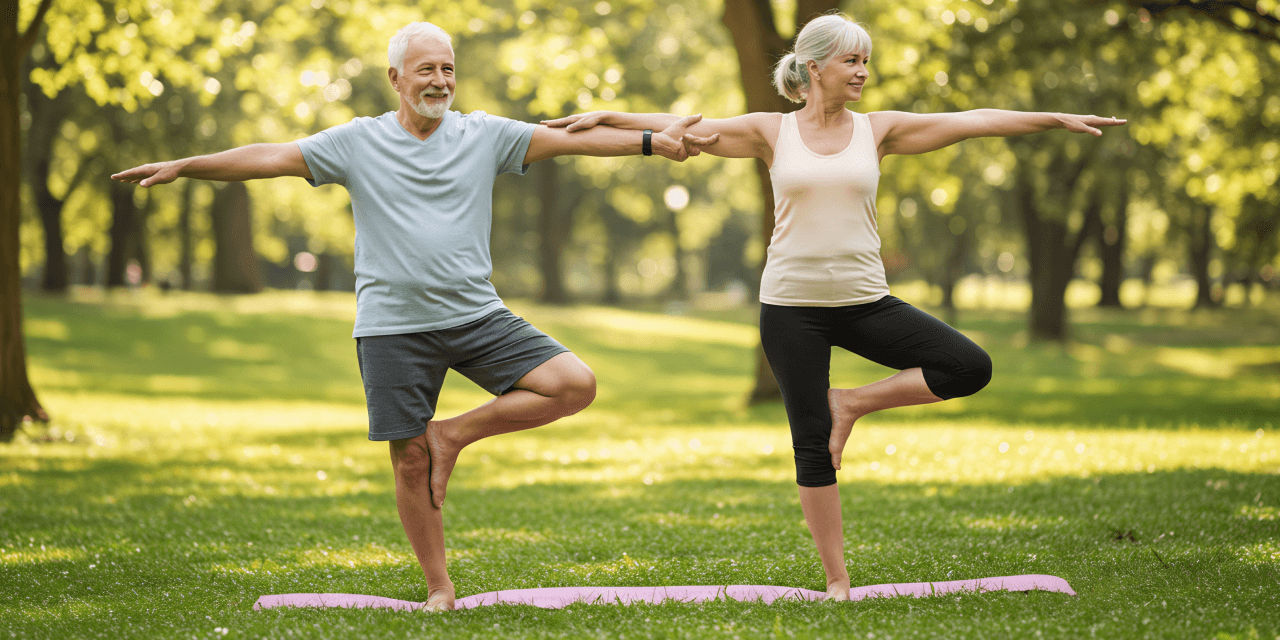
When we think about staying fit and healthy as we get older, we often think about walking, going to the gym, keeping our weight down or building muscle. But there is another part of fitness that I think we should all be paying much more attention to, and that’s balance.
Good balance is something we can easily take for granted when we are younger. We walk up and down stairs without thinking about it, stand on one leg to put our shoes on and step over things without giving it a second thought. But as we get older, or have changes to our body, maintaining our balance becomes increasingly important because it can help us stay steady on our feet, reduce our risk of falls and, importantly, help us remain independent.
Like strength, balance is a skill that can be maintained and improved with regular practice. For me, the really important thing is to think about balance alongside muscle and bone health as they all work together.
Balance, muscle and bone health work together
As we age, we naturally start to lose some muscle mass and bone density. The UK Chief Medical Officers' guidance highlights that muscle and bone strengthening activities are important throughout adulthood to help slow this natural decline, which becomes particularly relevant from around the age of 50. Strong muscles help us move and support our bodies, strong bones give us a stronger framework, and good balance helps us stay stable when we move. Put those three things together and you have a really important foundation for healthy ageing.
Easy, everyday tips to improve your balance
Some of the easiest ways to work on your balance can be incorporated into things you are already doing every day:
- One of my favourites is standing on one leg while brushing your teeth. You could start by holding onto the sink or wall if you need to, then gradually work towards standing unsupported. Swap legs halfway through.
- You could also practise heel raises while you are waiting for the kettle to boil or making your morning coffee. Simply rise up onto your toes and slowly lower your heels again. This works your calf muscles and challenges your balance at the same time. Heel raises are also recommended by the Royal Osteoporosis Society as a balance exercise.
- You can also walk heel-to-toe along a hallway, doing a few controlled sit-to-stands from a chair or taking the stairs instead of the lift.
These might seem like very small things, but they all contribute to keeping your body strong and capable. And then, alongside these everyday movements, make time for proper strength training a couple of times a week. It doesn't have to be complicated. You don't need an expensive gym membership or lots of equipment. Your own body weight, resistance bands or a pair of dumbbells can be enough to get started. The important thing is to keep challenging your body.
Staying strong and steady helps you keep doing what you love
For me, healthy ageing is about staying strong enough, steady enough and confident enough to keep doing the things I love. I want to be able to walk, travel, swim, carry my bags, get up from the floor and say yes to things without worrying whether my body can manage them.
About Lisa Marley
Lisa is a RSPH-accredited Chef and Wellness Expert with an AfN Certified Diploma in Nutrition Coaching. Working alongside myBMI, she helps translate nutrition science into practical, everyday advice, creating recipes, meal ideas and healthy eating guidance that support sustainable weight loss and long-term wellbeing.
Find out more about her work here.
Sources
- Physical activity for adults and older adults: 19 and over. (2026) UK Government. [Accessed 21 September 2026]
- How to improve your strength and flexibility. (2026) NHS. [Accessed 21 September 2026]
- Balance exercises. (2023) NHS. [Accessed 21 September 2026]
- Exercise to help your balance. (2026) Royal Osteoporosis Society. [Accessed 21 September 2026]
- Exercise for bones. (2026) Royal Osteoporosis Society. [Accessed 21 September 2026]
- Muscle tissue changes with aging. (2010) PMC. [Accessed 21 September 2026]
- Osteoporosis. (2022) NHS. [Accessed 21 September 2026]
%201.jpg&w=3840&q=75)