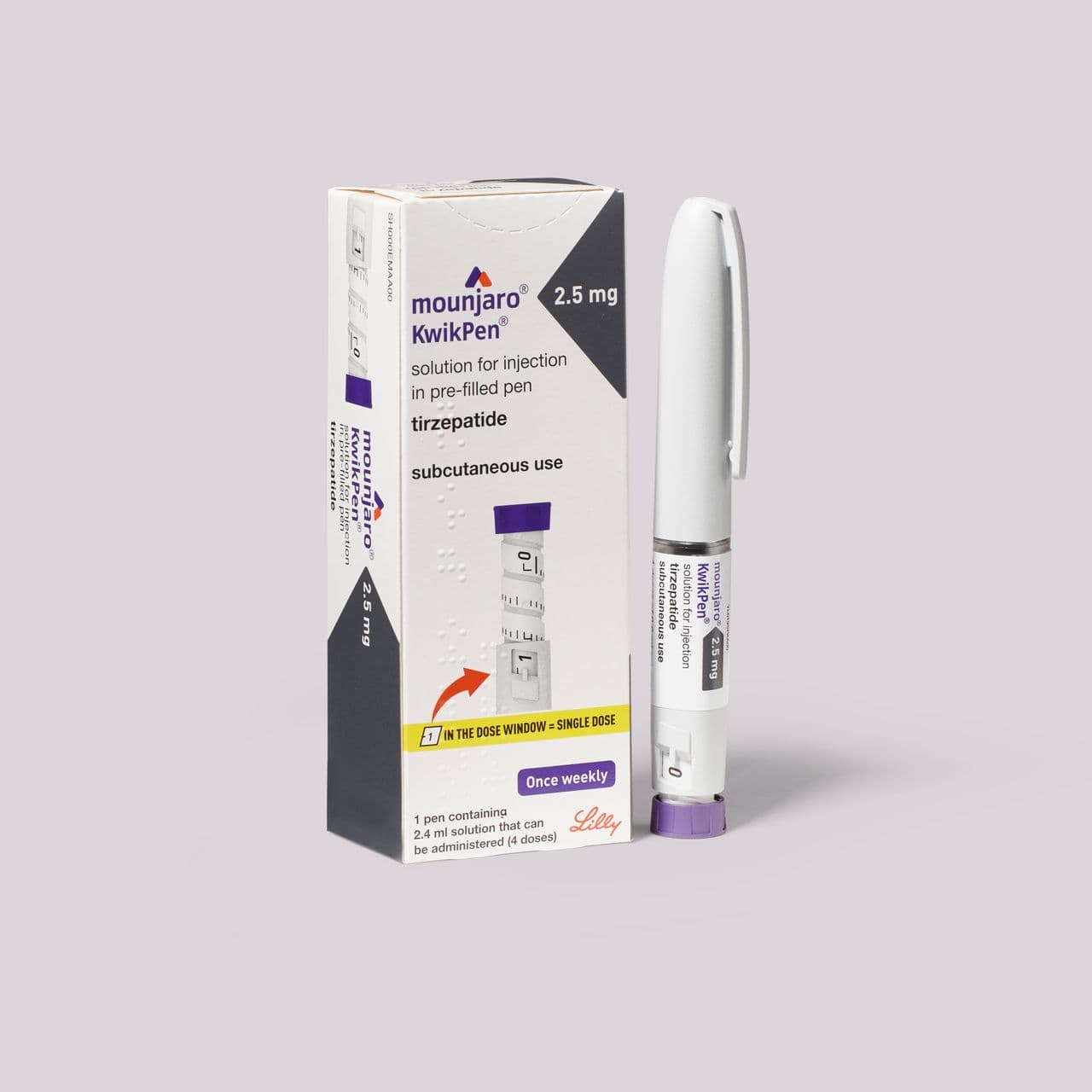
Mounjaro Box
Mounjaro Pen
Discreet delivery available
Image 1 of 3: Mounjaro Box
Prescription

Mounjaro (tirzepatide) Injections

Effective GLP-1 weight loss treatment

  • Starting from:£169
Patient Information leaflet
  • Clinically proven to help you lose up to 22%* of your weight
  • Quiets food noise and reduces your appetite
  • No subscription required. Pay as you go
  • Fast delivery in unmarked, discreet packaging
  • Ongoing care from our weight loss experts included
(4.3 stars)
Doses
A prescribing pharmacist and weight loss expert at myBMI

One of our experts will review your consultation and decide if this treatment is right for you.

What is Mounjaro?

Mounjaro (tirzepatide) is a prescription medication that helps manage hunger and support healthy weight loss. It works by regulating appetite and balancing blood sugar levels, making it easier to eat less and build sustainable habits.

How does tirzepatide work?

Tirzepatide helps your body feel full for longer and keeps blood sugar levels steady. It copies the effects of two natural hormones that control appetite and digestion – GLP-1 and GIP. Together, they help you eat less and stay satisfied after meals. By calming hunger signals and helping your body use food more efficiently, Mounjaro supports steady, healthy weight loss when used alongside a balanced diet and regular activity.

FAQs

Important Info About Mounjaro

How Effective is Mounjaro?

  • Clinically proven to help you lose up to 22%* of your weight
  • Shown to be safe and effective for long term use
  • Supported by our clinicians and weight loss experts

Is Mounjaro Right for Me?

Mounjaro may be suitable if:

Carousel scrolled to 0% of content

See how much weight you could lose

Use your starting weight to see where you could be in 6-12 months with our weight loss treatments. Check your eligibility and start your journey today.

Possible weight loss is estimated by the results seen in clinical trials. The amount of weight loss possible depends on health and lifestyle changes.

120kg


You could lose up to

12kg → 13kg

How it works

Here's how our service works in 3 simple steps:

Alt text
  • Online Consultation

    Start by completing a quick online consultation. This helps our clinicians understand your health and decide whether treatment is safe and suitable for you. As part of this, you’ll be asked to submit photos to confirm your identity and your weight. These will only ever be viewed by your clinician.

  • Clinical Review

    After your consultation, one of our clinicians will carefully assess whether treatment is right for you. If approved, they’ll issue a prescription and your medication will be delivered straight to your door with our discreet, tracked, and signed-for service.

  • Ongoing Care

    Your journey doesn’t stop with your delivery. Our clinicians are here to support you every step of the way. You can check in anytime through your account for advice, and we’ll review your progress regularly to help you stay on track and achieve lasting results. You’ll also be invited to join our exclusive support group, giving you access to expert medical guidance and tailored content designed to keep you motivated.

Your weight loss journey, supported by our experts

Your online consultation

Request treatment

Start by checking your eligibility, then complete a fast, secure online consultation. A clinician reviews everything and, if you’re approved, your treatment plan begins.

The start of your journey

Ongoing support

You’ve started treatment, and you’re beginning to see results. You’re building healthier habits, feeling more confident, and noticing wins outside the scales. Think looser clothing and more energy for the things you love.

Long-term progress and maintenance

Expert reviews

You’ve settled into a routine that supports real, lasting change. The habits you’ve built now help keep the weight off for good, and our clinicians and weight loss specialists continue to guide you every step of the way.

Care you can trust every step of the way

Our licensed, registered clinicians specialise in weight management and oversee every treatment, giving you safe, reliable support throughout your journey.

Carousel scrolled to 0% of content

What is Mounjaro? 

Mounjaro (tirzepatide) is a prescription-only weight loss injection that helps reduce appetite and support long-term weight management. It’s used alongside a healthy diet and lifestyle to help people with obesity or weight-related health conditions lose weight safely. 

Mounjaro contains tirzepatide, a type of medication known as a dual-acting hormone receptor agonist. It targets two natural hormones involved in blood sugar control and appetite regulation to help you feel fuller for longer and reduce food cravings. 

When taken consistently, Mounjaro can help you make sustainable lifestyle changes and maintain weight loss over time. 

Who manufactures Mounjaro in the UK? 

Mounjaro is manufactured by Eli Lilly and Company, a global healthcare firm that develops diabetes and obesity treatments. 

Eli Lilly holds the licence for tirzepatide and supplies Mounjaro across the UK under regulation by the Medicines and Healthcare products Regulatory Agency (MHRA). 

All Mounjaro pens dispensed by myBMI are sourced through approved, regulated supply chains that meet strict quality and safety standards. 

How does tirzepatide work? 

Tirzepatide helps your body feel full for longer and keeps blood sugar levels steady. It copies the effects of two natural hormones that control appetite and digestion – GLP-1 and GIP. Together, they help you eat less and stay satisfied after meals. 

By calming hunger signals and helping your body use food more efficiently, Mounjaro supports steady, healthy weight loss when used alongside a balanced diet and regular activity. 

The GLP-1 and GIP dual agonist mechanism of action 

Mounjaro works on two hormone pathways instead of one. GLP-1 and GIP both send messages to your brain to say you’ve eaten enough. They also help your body release insulin and slow how quickly food leaves your stomach. 

Because Mounjaro activates both hormone receptors, it can help control blood sugar and appetite more effectively than GLP-1-only medicines. This 2-in-1 action is known as a dual agonist effect. 

Is it safe to use for weight loss? 

Yes. Mounjaro is considered safe when prescribed and checked by a healthcare professional. It’s approved in the UK after studies showed it helps people lose weight and manage blood sugar safely. 

Most side effects are mild, like nausea, tiredness, or diarrhoea, and improve as your body adjusts. 

Get urgent help if you have severe stomach pain, swelling of the face or throat, or ongoing vomiting. 

How effective is Mounjaro? 

Mounjaro has been shown in clinical studies to help people lose a significant amount of weight. Results vary, but most people see steady progress when the injections are combined with lifestyle changes. 

Research shows that Mounjaro can help control appetite, improve energy levels, and make long-term weight management more achievable than dieting alone. 

How much weight loss is possible? 

In clinical studies, many participants lost between 15% and 20% after 72 weeks of treatment alongside healthy eating and regular activity. 

Weight loss results depend on your starting weight, dose, and consistency with treatment.  

How long does it take to start working? 

You may notice your appetite and portion sizes changing within the first few weeks. However, meaningful weight loss usually becomes clear after 8 to 12 weeks as the dose gradually increases. 

Because Mounjaro works by resetting hunger signals, the effects build slowly and safely. Most people continue to lose weight for several months before reaching a steady phase. 

Will I regain weight if I stop taking Mounjaro? 

It’s possible to regain some weight after stopping Mounjaro, especially if lifestyle changes aren’t maintained. Once treatment ends, hunger and appetite can gradually return to previous levels. 

To help maintain results, continue following a balanced diet, stay active, and seek ongoing support from your healthcare team. myBMI provides advice and aftercare plans for people who decide to stop treatment. 

How myBMI works 

Starting Mounjaro through myBMI is simple, safe, and fully supported. Our prescribers assess every case carefully to make sure treatment is right for you, then guide you throughout your journey – from consultation to long-term care. 

Ongoing care and support 

Your treatment doesn’t end with delivery. You’ll have access to expert advice throughout your plan, including progress check-ins and the option to message clinicians through your myBMI account. You’ll also be invited to join our support group for extra motivation and guidance. 

You’ll also get support dealing with  side effects. Our pharmacy team can prescribe common side effects treatments to help you on your GLP-1 weight loss journey.  

When it's time for your returning consultation, you can talk to a member of our pharmacy team about any side effects support you need. One of our prescribers will prescribe you the best medication for your needs. 

Side effects treatments that myBMI offers:  

  • Macrogol (for constipation) 
  • Omeprazole (for acid reflux) 
  • Loperamide (for diarrhoea
  • Lansoprazole (for acid reflux) 
  • Gaviscon Mint Chewable Tablets (for acid reflux) 
  • Prochlorperazine (for nausea) 


There are also natural treatment and home remedies and techniques to help manage your side effects. 

What’s included in our service? 

  • Clinician-led consultation and prescription 
  • Tracked, discreet delivery to your home 
  • Access to our patient support group 
  • Regular reviews and ongoing advice from your prescriber 
  • Resources to help you manage diet, exercise, and mindset 
  • Side effects advice and treatment 


“We've designed our consultation process at myBMI to be straightforward and focused on what matters most – your health and safety. When you begin your consultation, we ask all the necessary questions to create a complete picture of your health. This includes your medical history, any current medications you're taking, existing health conditions, and your previous experience with weight management. 
“Our qualified clinicians assess each consultation individually to make sure the treatment is right for you and won't interact with any other medications or conditions you have. We never rush through consultations or skip important safety checks. Your well-being is our top priority.  
“If we approve your treatment, we'll also explain how to use the medication properly, what side effects to watch for, and how to get in touch if you have any concerns during your treatment.” 

Ian Budd, Prescriber, Clinical Lead & Weight Loss Specialist 

Ready to start your Mounjaro journey? 

Complete your online consultation today and get personalised support from the myBMI clinical team.  

Mounjaro doses and titration 

Mounjaro treatment starts at a low dose that gradually increases over time – this is called titration. It helps your body adjust slowly, reducing side effects while allowing the medication to work safely and effectively. 

There are six Mounjaro pen strengths available, from 2.5 mg up to 15 mg. Most people begin on the lowest dose and move up every 4 weeks under clinical supervision. Increasing gradually gives your body time to adapt and helps you find the most effective dose for ongoing weight loss. 

Read on below to find out how titration works, when to increase your dose, and what to expect from each stage of treatment. 

Mounjaro UK dose chart 

Mounjaro comes in 6 pen strengths, from 2.5 mg to 15 mg. Most people start on the lowest dose and move up every 4 weeks. This gradual increase allows your body to adjust and keeps side effects as mild as possible. 

DoseCost
2.5mg£169
5mg£198
7.5mg£248
10mg£278
12.5mg£299
15mg£309

Each pre-filled pen contains 4 weekly doses, enough for a month of treatment when used once a week. 

Do you have to start on the first dose? 

Yes – everyone begins with the 2.5 mg pen. This starting dose helps your body get used to tirzepatide and reduces the chance of nausea or stomach upset. Your prescriber will then decide when it’s time to move up to the next strength. 

How does titration work? 

Titration means slowly increasing your dose over time. You usually step up every 4 weeks, following this pattern:  

ScheduleDose
Week 1-42.5mg
Week 5-85mg
Week 9-127.5mg
Week 13-1610mg
Week 17-2012.5mg
Week 21 and beyond

Your clinician will guide each change and check how your body is responding before approving the next increase. 

What is the most effective dose of Mounjaro? 

The best dose is the one that helps you lose weight safely with manageable side effects. For most people, this is between 10 mg and 15 mg once weekly. Higher doses don’t suit everyone, so your prescriber will help you find the right level for your body and goals. 

Mounjaro 5 mg 

The 5 mg pen is the first step-up from your starting dose. It’s often where people begin to notice appetite changes and steady weight loss. You’ll usually stay on this dose for at least 4 weeks before moving to 7.5 mg, depending on how you feel and your clinician’s advice. 

Why you have to increase your Mounjaro dose 

Your dose increases because your body adapts to each stage. Raising the amount of tirzepatide gradually keeps it effective and helps limit side effects. Each increase allows your body to keep responding without losing progress or comfort. 

Mounjaro vs other weight loss medications 

Mounjaro works differently from other popular weight loss injections like Wegovy and Ozempic. While all help reduce appetite, Mounjaro is the only treatment that acts on two key hormone pathways instead of one, which can lead to greater weight loss for many people. 

Mounjaro vs Wegovy 

Both Mounjaro and Wegovy help control appetite, but they work in slightly different ways. Wegovy (semaglutide) activates one hormone called GLP-1, while Mounjaro (tirzepatide) activates two – GLP-1 and GIP. This dual action can make Mounjaro more effective for weight loss, with studies showing larger average reductions in body weight. 

Wegovy and Mounjaro are both prescription-only medicines, and your prescriber will help decide which is most suitable based on your medical history, side effects, and how you respond to treatment. 

Switching from Wegovy to Mounjaro 

If you’re currently using Wegovy, you may be able to switch to Mounjaro under clinical supervision. Your prescriber will assess your progress, current dose, and any side effects before planning a safe transition. 

Switching is not an instant swap – your clinician may ask you to complete your current Wegovy pen or pause briefly before starting Mounjaro. The starting dose is always 2.5 mg, even if you’ve been on a higher Wegovy strength. 

Mounjaro vs Ozempic 

Mounjaro and Ozempic share similar ingredients and benefits but are approved for different uses. Ozempic (semaglutide) is licensed for type 2 diabetes, while Mounjaro (tirzepatide) is approved for both diabetes and weight loss. 

Mounjaro’s dual hormone effect (GLP-1 and GIP) may lead to greater appetite control and weight reduction compared with Ozempic’s single GLP-1 action. 

Both are prescription-only and must be used under medical guidance, with dose schedules and monitoring tailored to your health needs. 

Who is eligible for Mounjaro in the UK 

Mounjaro is prescribed for adults who have obesity or a weight-related health condition. It’s suitable for people with a BMI of 30 or above, or 27 and above if you have conditions such as type 2 diabetes, high blood pressure, or sleep apnoea. 

A clinician will check your medical history and current medication to make sure Mounjaro is a safe and effective choice. 

Is it suitable for any age? 

Mounjaro is licensed for use in adults aged 18 and over. It’s not approved for children or teenagers, as its safety and effectiveness in younger age groups haven’t been fully studied. 

Older adults can use Mounjaro if their clinician confirms it’s safe based on their overall health and medications. MyBMI only prescribes Mounjaro up to the age of 75.  

Can you take Mounjaro while pregnant or breastfeeding? 

Mounjaro should not be used during pregnancy or while breastfeeding. There isn’t enough evidence to show it’s safe for an unborn baby or for mothers who are breastfeeding. 

You should stop Mounjaro at least 1 month before trying to conceive and speak to your doctor about other options for managing weight during pregnancy. 

Does Mounjaro affect contraception? 

Mounjaro can make oral contraceptives less effective, particularly during the first 4 weeks, and then for 4 weeks after any dose increase. So, it’s important that you use other forms of contraception, such as condoms, alongside the pill if you want to avoid getting pregnant. You may also want to consider long-acting reversible contraception like the implant or coil.  

Who shouldn’t take Mounjaro? 

Mounjaro isn’t suitable for everyone. It should not be used by people who are allergic to tirzepatide or any of the ingredients in the injection. 

Your prescriber may also recommend an alternative if you have severe stomach or intestinal problems, pancreatitis, or other conditions that could make Mounjaro unsafe. 

Always tell your clinician about your full medical history and any medicines you’re taking before starting treatment. 

Can you get Mounjaro in the UK on the NHS? 

Yes. Mounjaro is approved for NHS use in England and Wales for people who meet specific criteria set by NICE.  

It’s currently also available to adults with type 2 diabetes who haven’t achieved good blood sugar control with other medicines. 

Mounjaro side effects 

Most side effects from Mounjaro are mild and short-term. The most common are nausea, bloating, tiredness, constipation, and diarrhoea. These usually ease as your body adjusts to the medicine. 

Serious side effects are rare, but you should seek urgent medical help if you experience: 

  • severe or long-lasting stomach pain 
  • swelling of your face, lips, or throat 
  • difficulty breathing or swallowing 
  • signs of pancreatitis (sharp pain in the upper abdomen, sometimes spreading to the back) 

To help manage mild nausea, eat smaller meals, avoid high-fat foods, and drink plenty of water. 

For full details, visit the Mounjaro side effects hub, which covers specific issues such as nausea, fatigue, and digestion changes in more detail. 

Mounjaro mixed with other medications 

Mounjaro can interact with certain medicines, especially those used for diabetes. Because it affects how quickly your stomach empties, it may change how some oral medicines are absorbed. 

myBMI does not prescribe Mounjaro to patients that are on insulin or other medications for diabetes (except metformin). 

Always tell your prescriber about every medicine or supplement you use before starting Mounjaro, including herbal or over-the-counter products. 

Storage, administration and disposal 

Mounjaro should always be stored, used, and disposed of safely to keep your treatment effective and hygienic. Follow the instructions provided with your pen and speak to your prescriber if you’re unsure about storage or injection technique. 

How to store Mounjaro 

Keep Mounjaro pens in their original packaging and out of reach of children. Store them in a cool place away from direct heat and sunlight. Always check the expiry date before use. 

Should you store Mounjaro in a refrigerator? 

Yes – Mounjaro should be kept in the fridge (2°C to 8°C) until you’re ready to use it. 

Once removed, a pen can be kept at room temperature (below 30°C) for up to 30 days. Do not freeze the pen, and never use it if it has been frozen or exposed to direct heat. 

Injecting Mounjaro  

Use 1 subcutaneous injection once a week on the same day. Use a new sterile needle each time and keep a sharps bin for disposal of used needles. 

  1. Get set. Wash hands. Gather your pen, a new needle, alcohol swab, cotton or gauze, and a sharps bin. 
  2. Let it warm. If stored in the fridge, leave the pen in its carton at room temperature for about 30 minutes. Do not heat it. 
  3. Check the pen. Right medicine and strength, in date, not damaged. The liquid should be clear and colourless. Do not use if cloudy or frozen. 
  4. Attach a new needle. Screw on straight. Remove and keep the outer needle cap. Remove the inner cap and discard it. 
  5. Prime your pen. Following the instructions on the patient information leaflet – release a small drop from the needle tip. This removes air and confirms the pen works. Do not inject the priming dose into your body. Wipe the bung at the end of the pen with an alcohol swab and let it dry. 
  6. Choose a site. Abdomen, upper thigh, or upper arm. Rotate sites each week. Avoid sore, bruised, scarred, or broken skin and stay at least 5 cm from the navel. Insert the needle at 90° into the fatty layer under the skin. Pinch a fold only if your clinician has shown you to. 
  7. Deliver the dose. Press and hold the button until the dose is given. Keep the needle in place for a few seconds as per the patient information leaflet to ensure a full dose. 
  8. Finish safely. Remove the needle straight out. Press lightly with cotton if needed. Do not rub. Recap with the large outer cap, unscrew, and place the needle in a sharps bin. Replace the pen cap. 

Missed dose rules: If you are within 4 days of the missed dose, take it as soon as you remember and continue as normal. If more than 4 days have passed, skip the missed dose and take your next dose on your usual day. 

Best places to inject 

Use the abdomen, upper thigh, or upper arm. Rotate the exact spot each week to reduce irritation. Many people find the abdomen easiest for self-injection. Upper arm injections usually need another person to help. 

  • Abdomen: use the belly area but not within 5 cm of the navel. 
  • Thigh: front of the upper thigh. 
  • Upper arm: back of the upper arm if someone else is administering. 

What if I inject too much? 

Contact a healthcare professional immediately. Too much medicine can cause nausea, vomiting, or low blood sugar. If symptoms are severe, call NHS 111 or go to A&E and take the pen and patient information leaflet with you. 

Injection aftercare 

After injecting, gently press the site with a clean tissue or cotton pad for a few seconds. Avoid rubbing the skin. Used needles should be placed straight into a sharps bin, and hands should be washed after each injection. 

Disposing of your Mounjaro pen 

Used or expired pens must be disposed of in a sharps bin – never in household waste. Your pharmacy or local council can provide one and advise how to return it safely. 

Always replace the cap before disposal and keep sharps containers out of reach of children and pets. 

Mounjaro diet advice 

Mounjaro works best when paired with healthy eating and steady portion control. Because it slows digestion and reduces appetite, smaller, balanced meals will usually feel more satisfying. The aim is to nourish your body - not restrict it. 

Focus on lean proteins, high-fibre foods, fruit, vegetables, and plenty of water. Avoid skipping meals or eating too quickly, as this can cause nausea. 

Foods to avoid whilst taking Mounjaro 

There are no foods you must completely avoid, but some can make side effects worse. Greasy, fried, or very rich foods can increase nausea or bloating, especially soon after injecting. 

You may also want to limit: 

  • large, heavy meals – try smaller portions spread through the day 
  • spicy foods if they upset your stomach 
  • sugary snacks and refined carbs, which can affect blood sugar balance 
  • high-fat foods such as cheese, cream, and pastries 

Eating slowly and stopping when comfortably full can help prevent discomfort. 

Mounjaro and alcohol 

It’s best to limit or avoid alcohol while using Mounjaro. Alcohol can irritate the stomach and increase your risk of nausea or low blood sugar, especially if you’re eating less. 

If you do drink, keep it moderate. Always eat something before drinking alcohol and stay hydrated. 

Mounjaro and fizzy drinks 

Fizzy drinks, including diet versions, can cause bloating or discomfort while taking Mounjaro. Because the medicine slows digestion, gas from carbonated drinks can build up more easily. 

Choose still water, herbal tea, or diluted juice instead. If you do have fizzy drinks occasionally, sip them slowly and avoid drinking straight after injecting. 

Mounjaro and exercise 

Staying active helps you get the best results from Mounjaro. Exercise boosts energy, supports muscle tone, and helps maintain weight loss once the medicine starts working. Even small amounts of daily movement make a difference. 

You don’t need to join a gym – gentle walks, swimming, or home workouts all count. The key is consistency and choosing activities you enjoy. 

Do you have to exercise while taking Mounjaro? 

Exercise isn’t mandatory, but it will improve your progress and overall health. Mounjaro helps you eat less, while activity helps your body burn calories and protect muscle as you lose weight. 

Start small if you’re new to exercise – even 10 to 15 minutes a day can help build stamina. Your clinician may recommend 150 minutes of moderate activity each week, following NHS guidance. 

Sources 

Mounjaro KwikPen 2.5mg solution for injection in pre-filled pen (2025) EMC [accessed 08 November 2025] 

Ozempic 0.25 mg solution for injection in pre-filled pen (2025) EMC [accessed 08 November 2025] 

Wegovy 0.25 mg, FlexTouch solution for injection in pre-filled pen (2025) EMC [accessed 08 November 2025] 

GLP-1 medicines for weight loss and diabetes: what you need to know (2025) MHRA [accessed 08 November 2025] 
Lose weight (2025) NHS  [accessed 08 November 2025] 

Obesity (2023) NHS [accessed 08 November 2025] 

Physical activity guidelines for adults aged 19 to 64 (2024) NHS [accessed 08 November 2025] 
Weight management injections (2025) NHS [accessed 08 November 2025] 

Tirzepatide for managing overweight and obesity (2025) NICE [accessed 08 November 2025] 

*https://www.nejm.org/doi/full/10.1056/NEJMoa2206038

FAQs

Need help?

It’s natural to have questions, and we’re here to keep things straightforward so you can stay focused on your journey.

Get support